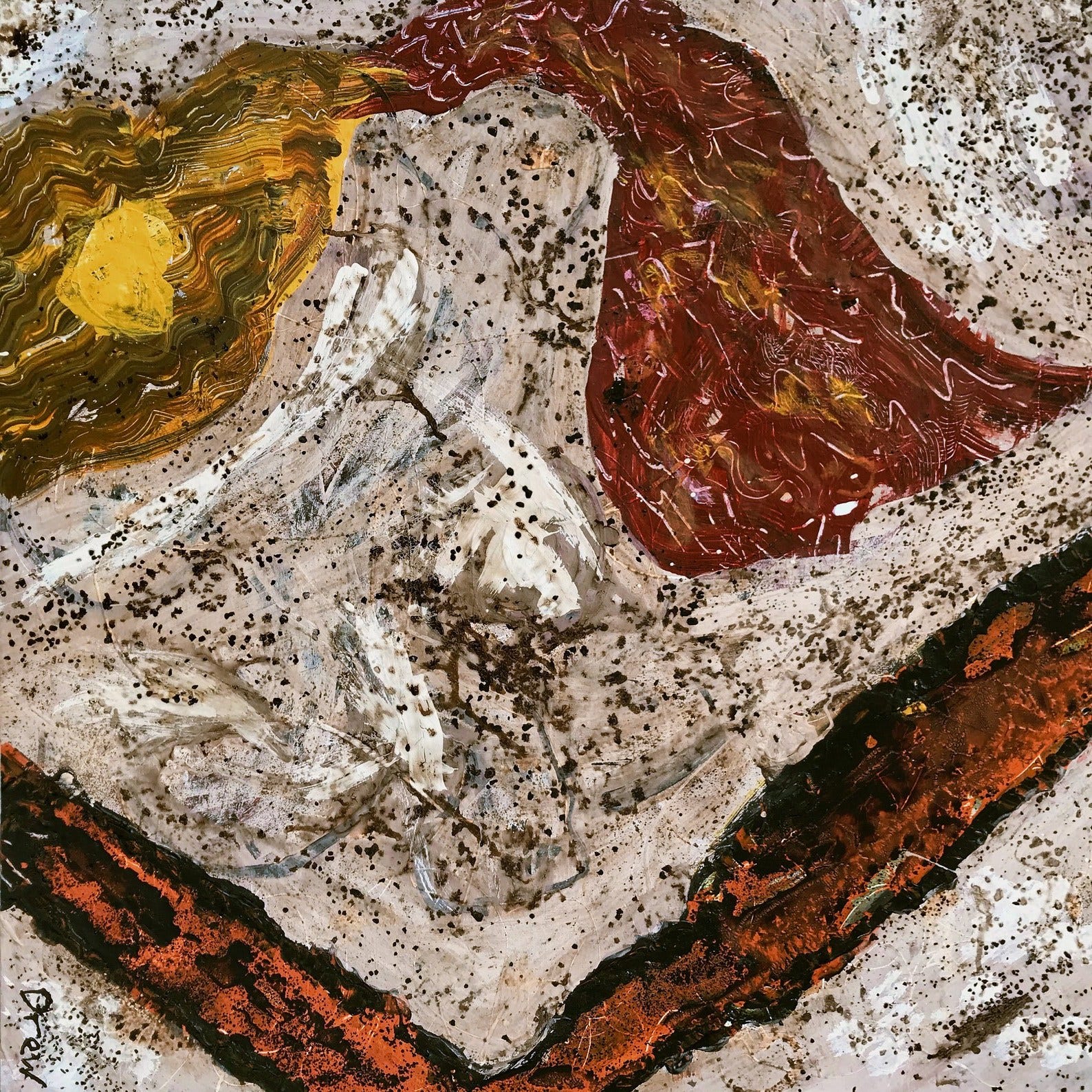
The Coffee Lovers
The world's only artwork painted in 3,673 drops of aromatic Arabica espresso.
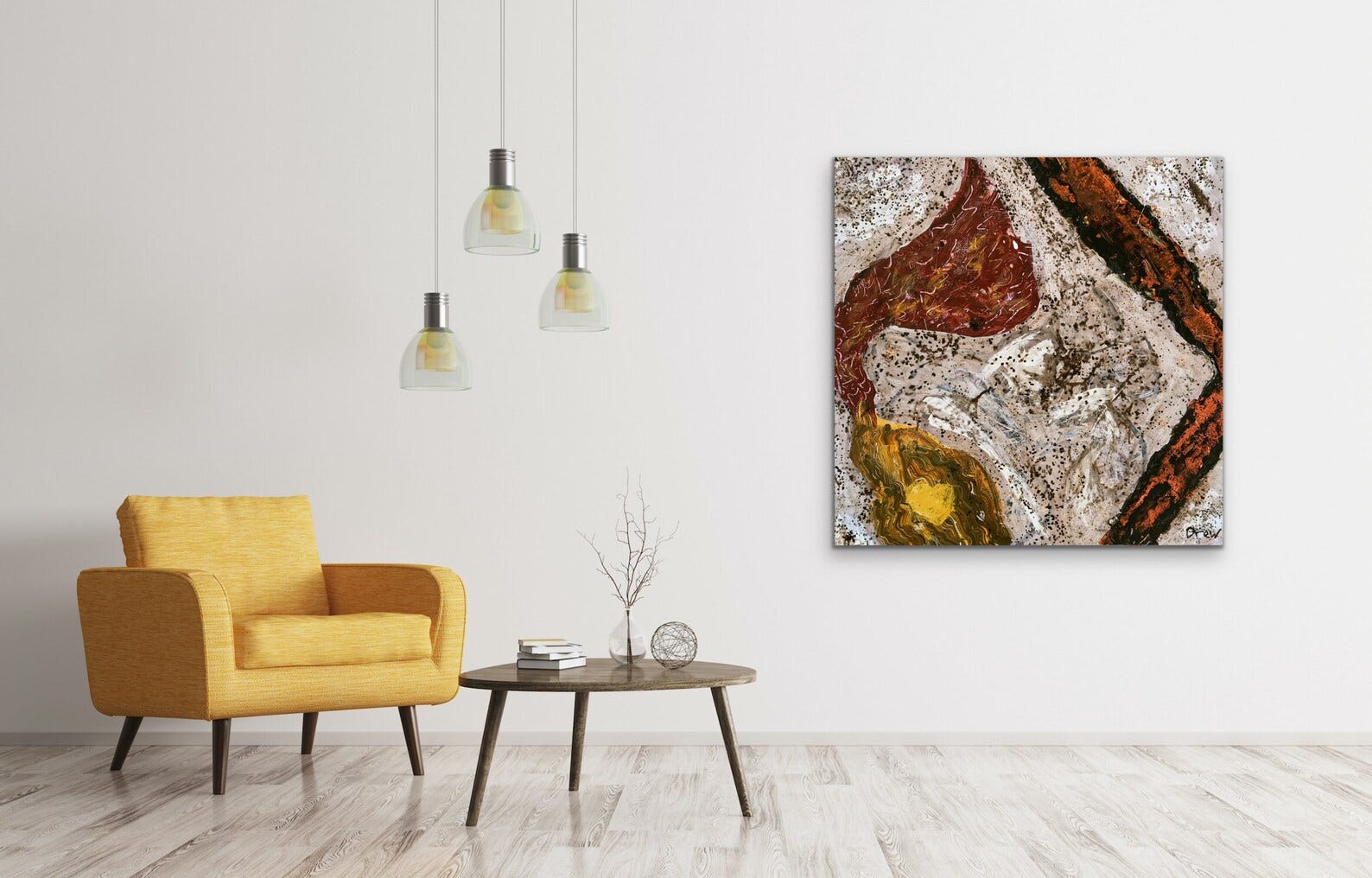
It all begins with the perfect bean. Arabica, of course. Softer and sweeter than rich-but-bitter robusta, with fragrant berry tones that tantalise the senses, it must be grown at a specific altitude, on accommodating soil, in a temperate climate that nurtures, never threatens. From Kenya and Colombia to the peaks of Costa Rica, the mountain is the bean’s best friend.
The right grind is essential. Not too coarse, nor pulverised. Not too fast, or all that effort will be lost, the coffee scorched, unusable. Time must be taken, and effort applied. Then, and only then, can you spread the coffee on the canvas, mix it into paint. Acrylic is ideal for crema. Emulsion gives body, dimension, and depth. You may choose to add sugar; the artist refrained.
The Coffee Lovers is a piece that exists only once, only now. It cannot be copied. It will never be remade. This is because it was poured, not painted, brewed, not produced. Comprising 3,673 individual flecks of espresso—1,189 of them hardened by heat into glossy beads of black enamel—it was extracted over the course of a year, drip by painstaking drip. The work is open to digestion, but duplication is impossible.
The Artwork Up Close
Scratch and sniff. Touch and taste. Coffee will insinuate itself into your sinuses, your soft palate, the back of your throat, the tip of your tongue. This is the artist’s seal of authenticity, the artwork’s undeniable provenance. Step back, sit down, and drink it in.
What do we see? Two lovers, abstracted. One appears feminine, its upturned visage expectant, adoring, the other quite masculine, its long face a mask, ambivalent and atavistic. The outline of a large white heart hovers between them like the froth atop a cappuccino, its atrium a piebald horse with albatross wings. Other creatures can be seen at the edges of the canvas, from crabs to bluebirds denuded of their colors.


The figures themselves demand our attention. The leftmost lover, its head and neck precarious but beautiful, is a riot of red and yellow acrylic, its abdomen undulating, its paper heart exposed, its hair a cacophony of syncopated mark making. The form on the right is no less arresting: its tubular torso, blackened and abrasive, lays waste to the canvas like a river of lava. Pitted by craters, the orange skin is serpentine. There is a suggestion of an eye, as yellow as its paramour's heart. An orange curve describes the mouth. But it is barely there at all.
Adam and Eve in the Garden of Gomorrah
Turn right. Look left. And see the secret of this piece, hidden in plain sight. Before it was espresso, this work was something else: Adam and Eve at the end of their Eden. The sweep of raw scarlet is clearly Eve’s hair, her face a blank space, the outline of her elephantine body still visible, still readable. The yellow streak is Adam’s mane, his head turned away from us, his nose and eye in profile. Other lovers from another story, lost to thick layers of coffee and time.